How sawing works
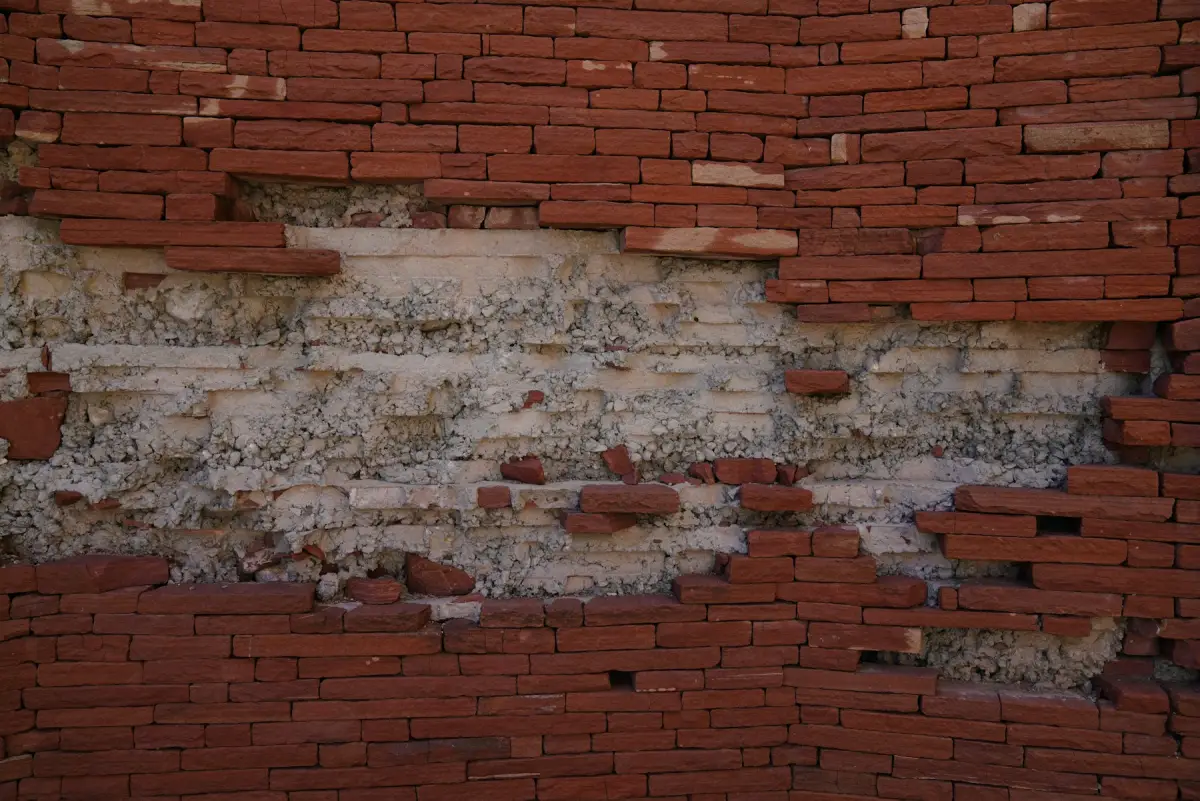
Sawing is the mechanical version of a retrofitted horizontal barrier. A cut is run along a continuous bed joint, a membrane is set into it and the masonry above is supported again. The result is a physical barrier that water cannot pass.
- Survey and choice of joint. It has to be continuous and the masonry regular, otherwise the method is out.
- Opening the working band. Plaster hacked off inside and out, depending on access.
- Cutting in sections. Work is always limited to a short length, so the masonry keeps carrying load.
- Setting the membrane. An insulating sheet is slid into the cut with overlaps, so the pieces link up.
- Wedging and filling the joint. The masonry is supported again and the joint filled, so it does not settle.
- Making good and plastering. Only then does the finish follow.
When sawing wins
- Regular brickwork with a continuous joint. The ideal case for this method.
- When you want to see the result. The membrane can be checked physically, unlike a chemical barrier.
- In heavily salted or permanently wet masonry. Where a chemical product would spread less reliably.
When sawing is out
- Stone and mixed masonry. The saw has no line to follow.
- No access to the wall. You need to reach the band, at least from one side.
- Complicated layouts and penetrations. Around stairs, internal piers and services the cut is hard to run.
- When the cause is not rising damp. Like injection, it does nothing for condensation or leaks.
If sawing turns out to be impossible, that is not a dead end. The usual alternative is injection, and for cellar walls vertical waterproofing.
What the quote should contain
With sawing it pays to insist that the quote states the length of wall in metres, the thickness of the masonry, which side the work is done from, the type of membrane used, how overlaps and corner junctions are handled and what happens to the plaster. Then also how the work proceeds in sections and how the joint is filled once the membrane is in. That last point is exactly where corners get cut, and where it shows up as cracks a few years later.